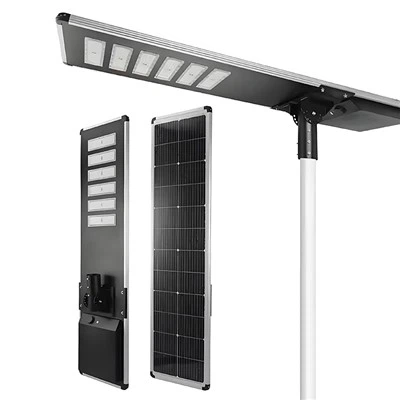
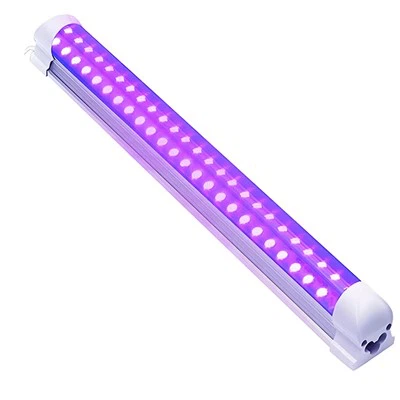
An rafmagns íhlutur notaður til losun ljós inn a rými is vísað til as a lýsing festing. Orð "high bay" og "low bay" lighting, which mainly define the area and the height of the ceilings involved, are frequently used in the lighting business. A lighting fixture called a high bay luminaire is made for industrial sites that are elevated above the ground or a work surface. Applications for high bay lighting may include lighting systems made for use in "high bays" such as warehouses, industrial plants, sizable retail establishments, sports arenas, or the like, where the the ceilings might be 30 feet or higher.
Compared to conventional HID high bays, LED high bay luminaires provide a number of benefits, including reduced energy consumption, better outputs at higher driving currents, longer lifetime, increased robustness, smaller size, quicker switching, and exceptional durability and dependability. The complexities brought on by LED overheating, however, are a serious issue with the usage of solid-state lighting.
The semiconductor diode is the foundation of solid state lighting devices, which are represented by light emitting diodes. Electrons and holes rejoin when the diode is forward biassed (activated or switched on), releasing energy in the form of light. These optoelectronic devices produce heat as a consequence of turning energy into light, which, if allowed to build up, might increase the working temperature, resulting in efficiency deterioration and early failure. The capacity to control a junction's temperature and reach the ideal steady-state operating temperature often determines an LED's performance. worse light output, worse luminaire efficiency, a dominating wavelength, and even shorter life expectancy are frequently correlated with a higher junction temperature. The LED's junction temperature has a considerable influence on both its overall efficiency and L70 life. For a gallium nitride (GaN) LED, the life duration can be reduced by 10 kHrs (1000 hours) for every 10 degree rise in junction temperature (over 25 degree ). The efficiency of the LEDs will decrease by more than 10 percent if the junction temperature is raised from 40 degree to 70 degree . In order to sustain performance and regulate the operating temperature of the LED fixture for a certain change in the junction temperature and the ambient temperature, the proper thermal management solutions must be devised.
Svæði með hár Andrúmsloft hitastig Krefjast hár Bay lýsing
Lýsing innréttingar eru oft festar at or nálægt að loft loft í há flóa byggingar. To veita fullnægjandi lýsingu, há afl LED- eru algeng notuð in þessir lampar. Rafmagns straumur gefinn til an LED og the rekstrar hitastig of the LED báðir áhrif hvað mikið ljós það framleiðir. Hátt raf drif merki merki getur verið notað til drif LED með há lýsandi ljósflæði, þó gera svo oft niðurstöður in LEDs rekstrar at há hitastig. Að auki, há bay forrit venjulega notað in stillingar sem eru meira ætandi og alvarleg en lág bay forrit. Sérstaklega in framleiðsla aðstaða aðstaða like stál myllur, steypu steypur, og gler framleiðsla plöntur, há bay stillingar getur hafa meiri ambient hitastig, more airborne dust, and oil agnir. An LED getur orðið skemmt með hita hita framleitt með þess meðfylgjandi hringrás meðan vinna í an girðing með lítið magn pláss og % 2fyrir í an umhverfi umhverfi hitastig.
As a afleiðing, það % 27s mikilvægt til stjórna hita hita framleitt inni LED innrétting meðan nota hár máttur ljós á svæðum með hár andrúmsloft hitastig. Thermal stjórnun refers til a a kerfi % 27s getu til fjarlægja the hár fastur the afgangur hita sem safnast saman við mótin 2c oft getur versnað the fosfór og stytta lampi líf. Með the notkun af aukagjald lampi efni % 2c bætt hiti dreifing hönnun % 2c og jafnt hitastig skynjarar það sjálfkrafa lækkun ljós þegar of mikið hiti byggingar upp, LED framleiðendur eru alltaf að bæta þeirra hönnun fyrir hærri hitastig.
Notaðu hágæða LED til lifa af
In general, high-quality LEDs are durable components that can function in hot environments. For instance, CREE XM-L LEDs can function at a junction temperature of up to 150 degree . The relative light output of LED luminaires drops by just 10 percent at ambient temperatures of 60 degree in comparison to relative light output at 25 degree . Thermal resistance is a term used to describe a device's overall capacity to transport heat in the LED sector. The heat-spreading connection and packaging of the LEDs themselves have been designed with minimal thermal resistance paths. The maximum power that may be dissipated in an LED package depends on its thermal resistance as well as its maximum working temperature. The thermal resistance between the LED junction and surrounding air determines the maximum forward current. strong LED junction temperatures result from large heat buildup inside of LEDs with strong thermal resistance. When this occurs, the effects of growing junction temperature in the LED can balance the effects of rising forward current, causing the LED to maintain or even decrease its light output level despite increases in the forward current. In order to maximise luminaire life and optical properties, it is crucial that the luminaire be constructed in a way that minimises the heat resistance from the solder point to ambient. The OSRAM Opto Semiconductors-presented OSLON Square LED family has a low thermal resistance of just 3.8 K/W, which performs particularly well in high ambient temperatures and may achieve a lifespan of significantly more than 50,000 hours even at high temperatures of up to 135 degree in the LED. Based on constant current operation with junction temperature maintained at or below 120 degree , the Lumileds LUXEON K2 white LEDs offer 70 percent lumen maintenance at 50,000 hours of operation at a forward current of 1000 mA. It can operate with little output loss at junction temperatures as high as 150 degree .
Thermal Control% 3a A Mikilvægt Þáttur af kerfi Árangur
An effective thermal design is essential for industrial lighting fixtures, especially the UFO-style high bays where circuitry and LEDs are placed in an enclosed housing, to lower the operating temperature of such optoelectronic devices while enhancing performance and dependability. When it comes to high bay designs, the heat sink—which is frequently an integrated luminaire housing—is the main emphasis of the thermal design. Each LED's junction and the driver housing are intended to be cooled by a heat sink. In order to expand the heat sink's surface area and facilitate higher convective heat exchange with the surrounding air, heat sinks are often made of a heat conducting material, such as metal, and have fins or channels. A built-in thermal venting chamber that is cast into the housing is possible. The material composition and ambient factors affect the high bay housing's thermal conductivity. Thermal conduction is another method for removing waste heat that is based on the system's component parts' geometry. Any material with a high thermal conductivity may be used to make heat sinks, including but not restricted to copper, aluminium, and metal alloys. Despite the fact that copper has a thermal conductivity of at least 400 W/m-K. Due to its relatively high thermal conductivity and simplicity of manufacture, aluminium is the metal of choice for heat sinks. The aluminium housing can have an acrylic powder coat coating applied to both the inner and outer surfaces to enhance heat dissipation and corrosion resistance.